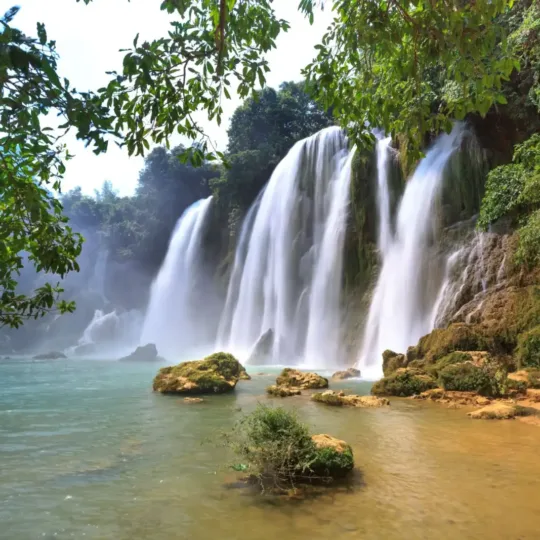
Quick Summary: Cao Bang weather runs from 15.3°C in January to 27.8°C in July. The best time to visit is late September to November, when Ban Gioc Waterfall is still full and rain days drop from 21 in September to 11 in November.
Cao Bang is a border land of karst hills, quiet valleys and one of the biggest waterfalls in the region. Its weather decides whether the falls thunder or trickle, and whether the mountain roads stay open.

Cao Bang Weather at a Glance
- Best months: September to November, when the waterfall is full. October–November has 11–13 rain days a month.
- Average temperature: from 15.3°C in January to 27.8°C in July.
- Wet season: May to September, with 21–27 rain days a month. August peaks at 27 rain days.
- Cool season: December to February, 15.3–16.5°C, with 10–12 rain days a month.
Best Time to Visit Cao Bang
September to November is the best window for Cao Bang weather. Ban Gioc Waterfall still carries plenty of water after the rains, and rice fields around Trung Khanh turn golden in autumn. By October and November, rain days fall to 11–13 a month at 20.2–23.4°C.
From November to April, water levels drop and Thang Hen Lake shows its separate small lakes more clearly. March and April can be drizzly (16–17 rain days a month). Try to skip June to August: rain days reach 24–27 a month, and flooded or landslide-hit roads can ruin a tight schedule.
Cao Bang Weather by Season
- Winter (December–February): 15.3–16.5°C, 10–12 rain days a month. Cool, foggy and damp.
- Spring (March–April): 20.5–23.7°C, 16–17 rain days a month. Warmer days with frequent drizzle.
- Rainy season (May–September): 26.1–27.8°C, 21–27 rain days a month. Hot, wet, with full rivers and a powerful waterfall.
- Autumn (October–November): 20.2–23.4°C, 11–13 rain days a month. Fewer rain days and pleasant sightseeing weather.
UNESCO’s status for the region is covered in VTV’s report on Cao Bang’s Global Geopark, which describes a highland tropical monsoon climate with clear wet and dry seasons.
Daily Weather & Humidity Insights
- Humidity: it is high, and mist often settles in valleys, especially in winter mornings.
- Altitude: the geopark rises from lowland valleys to high western districts, so upland areas can be noticeably colder than the town.
- Night chill: in the high districts, winter nights can fall to single digits.
- Cave and waterfall spray: caves stay cool and damp, and the waterfall area can feel misty even on dry days.
What to Wear and Pack
- Layers: a warm jacket for December to February and a light layer for evenings all year.
- Rain jacket: pack one from May to October, and in spring for drizzle.
- Shoes with grip: cave floors and waterfall paths are often wet.
- Sun care: a hat and sunscreen, because the border valleys can feel bright and open.
Essential Local Tips
- Visit Ban Gioc early: mornings often have soft light and fewer tour buses, and mist over the water looks great for photos.
- Keep your route flexible from June to September: flash floods and landslides can close mountain roads. Add a buffer day, and check local road updates.
- Go in harvest season: rice fields near Trung Khanh turn golden in autumn, and lower water levels later in the year open up new views at Thang Hen Lake.
Ready to plan the rest of your trip? See more things to do in our full Cao Bang travel guide.