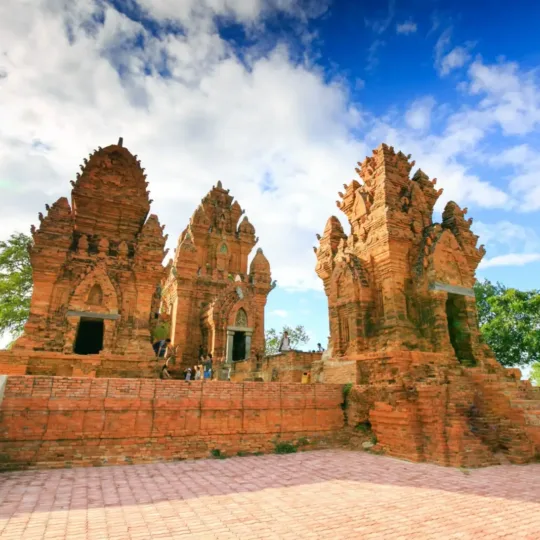
Quick Summary: My Son weather follows the same dry-wet pattern as nearby Da Nang and Hoi An, but its inland valley setting makes the midday sun feel more intense. The best time to visit My Son is February to early May, when the ancient Cham temple trails are dry, cool at sunrise, and free of flood risk.
Unlike the coastal towns nearby, My Son Sanctuary sits inland in a quiet jungle valley ringed by low hills, so the sea breeze that softens Da Nang and Hoi An’s heat rarely reaches here. That makes the sun hit harder at midday, even though the region shares the same wet and dry seasons.

My Son Weather at a Glance
- My Son weather has a dry season from around February to August and a wet season from September to January.
- Average temperatures range from about 21°C in January to nearly 30°C in June.
- March and April are the driest months, with only around 12 rain days each.
- October is the wettest month, with roughly 26 rain days a month.
Best Time to Visit
The best time to visit My Son is February to early May, and again in August, according to local tour operators. This window avoids both the heaviest midday heat of peak summer and the flood risk of the September–January rains, while keeping the temple trails dry and easy to walk.
Weather by Seasons
My Son’s dry season runs roughly February through August, with temperatures rising from 22°C in February to a summer peak near 30°C in June, and rain days generally staying under 20. The rainy season, September to January, brings the heaviest downpours in October (around 26 rain days) and carries real typhoon risk, since the valley collects runoff from the surrounding hills. Local operator HoiAn Day Trip notes that daytime temperatures in the dry season regularly climb into the 30s°C across the sanctuary grounds.
Daily Weather & Humidity Insights
Because My Son sits away from the coast, humidity can feel just as high as at the beach, typically in the low-to-mid 80s percent, but without the sea breeze that helps cool coastal towns in the afternoon. Day-night temperature swings are moderate, but the valley setting means midday heat builds up more noticeably among the stone ruins, which absorb and hold warmth through the afternoon.
What to Wear and Pack
Lightweight, breathable clothing and closed-toe walking shoes are essential for the uneven brick paths among the ruins. A wide-brimmed hat, strong sunscreen and a reusable water bottle matter more here than at coastal sites, since shade is limited and the inland heat builds quickly after mid-morning.
Essential Local Tips
- Visit at sunrise or arrive by the site’s 6am opening during the hot months of June to August, when midday temperatures and tour-group crowds both peak fastest in this exposed valley.
- Watch weather forecasts closely from September to January; heavy rain and typhoons can make the unpaved valley paths slippery or temporarily inaccessible.
- Come between February and April to catch the surrounding forest at its greenest and hear more birdsong around the temples before the summer heat quiets the valley at midday. See more things to do in our full My Son travel guide.