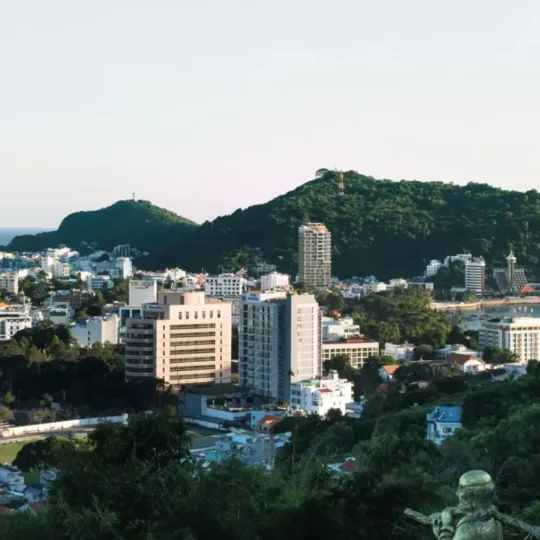
Quick Summary: Vung Tau weather stays warm and breeze-cooled year-round, with a dry season from December to April and a wet season from May to November. The best time to visit is January to March, when rain is rare (as few as 1 rain day in February) and the sea stays calm for swimming. May is the warmest month, averaging 28.9°C.
Perched on a peninsula jutting into the East Sea, Vung Tau catches an almost constant sea breeze that takes the edge off the tropical heat felt more sharply in inland southern towns. That same exposure to open water means its weather swings between calm, sunny stretches and sudden squalls blown in off the sea.

Vung Tau Weather at a Glance
- Vung Tau weather is hottest in May, averaging 28.9°C; January is the coolest month at 26.2°C.
- Dry season runs December–April, with as few as 1 rain day in February and March.
- Wet season runs May–November, with rain days climbing to 29 in July.
- The city logs around 188 rain days a year — fewer than many inland southern towns, thanks to its coastal position.
Best Time to Visit
January through March bring Vung Tau’s driest, calmest weather: only 1–3 rain days a month and average temperatures around 26.2–27.4°C. This stretch is ideal for beach days, since the sea stays calm enough for swimming and watersports. April turns hotter and hazier before the rains return in May.
Weather by Seasons
Dry Season (December–April): Temperatures range from 26.2°C in December–January up to 28.7°C in April, with rain days climbing from just 1 in February–March to 8 by April as the season transitions. Skies stay mostly clear and seas calm — this is peak season for the beach.
Wet Season (May–November): Average temperatures stay warm at 27.2–28.9°C, while rain days jump to 14–29 per month, peaking in July at 29 days. Per weather data compiled by Kupi.com, the largest day-night temperature swings in Vung Tau — up to around 7°C — happen in the drier months, while the rainy season narrows that gap to roughly 5°C as heavier cloud cover holds nighttime warmth in.
Daily Weather & Humidity Insights
Being a coastal town, Vung Tau’s humidity rarely dips as low as inland cities — expect it to hover around 70–80% for most of the year, climbing toward the upper 80s during the heaviest July–September rains. The sea breeze helps the heat feel less oppressive than in Ho Chi Minh City just two hours away, but afternoons can still feel sticky once the rains set in. Evenings by the water are noticeably cooler and more comfortable than after-dark temperatures inland.
What to Wear and Pack
- Light, quick-dry swimwear and cover-ups — this is primarily a beach town.
- A windbreaker or light jacket for breezy evenings on the waterfront.
- Rain protection (umbrella or poncho) for the May–November wet season.
- Reef-safe sunscreen and sunglasses for the seaside sun.
- Sandals or water shoes that can handle sand and the occasional wet street.
Essential Local Tips
- Weekends bring a surge of day-trippers from Ho Chi Minh City (about two hours away), so beaches and seafood restaurants get busiest on Saturday and Sunday afternoons.
- Strong wind and higher waves can appear suddenly during the wet season, especially as tropical depressions pass offshore from July to October — check local advisories before swimming far out.
- Sunset from the Christ the King statue on Small Mountain is best chased on clear dry-season evenings. See more things to do in our our full Vung Tau travel guide.