Quick Summary: Visitors planning what to eat in Quy Nhon will find a distinct culinary tradition shaped by the Binh Dinh coastline, featuring fresh seafood, crispy pancakes, and ancient heritage recipes. Local dishes typically cost between 20,000 VND ($0.80) and 60,000 VND ($2.30), making dining in the region affordable for all travellers.
What is Banh Xeo Tom Nhay?
Banh Xeo Tom Nhay is a crispy pancake with tiny jumping shrimp, the signature dish of Quy Nhon. The batter combines rice flour and turmeric, which creates a bright yellow color and a crisp texture when cooked in small cast-iron pans over an open flame. Vendors select translucent freshwater shrimp that are still lively before cooking, giving the dish its descriptive name and a naturally sweet marine flavor.
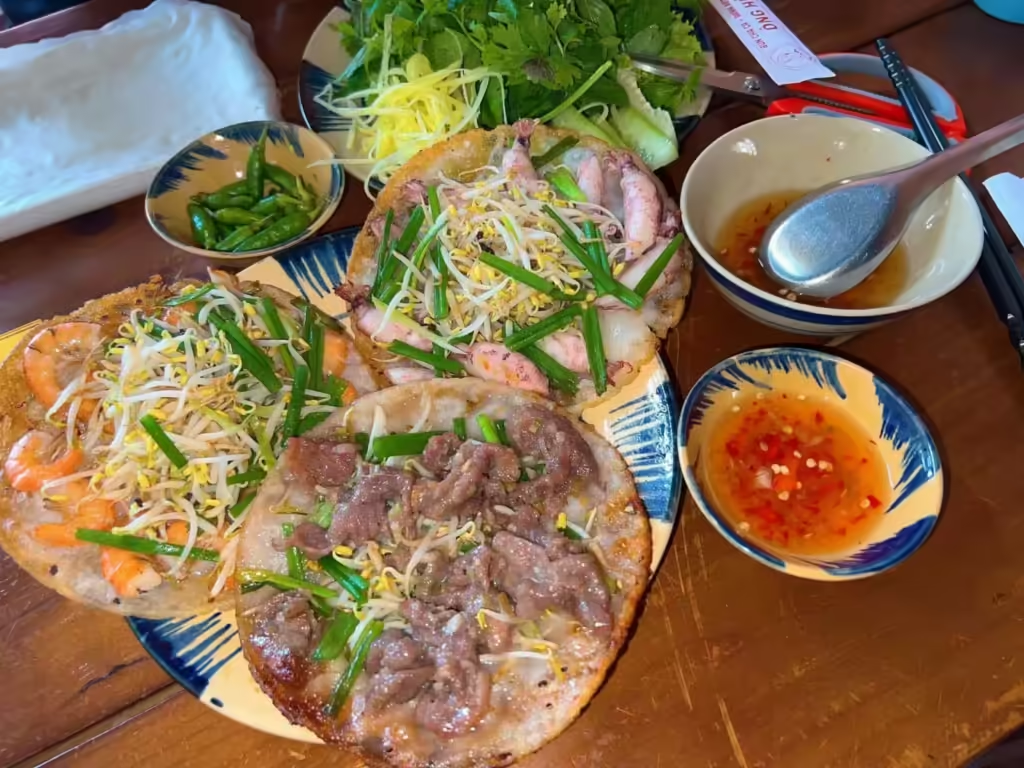
This specialty is typically wrapped inside rice paper with fresh mustard greens, herbs, and cucumber before being dipped in a sweet and spicy garlic fish sauce. A single portion usually costs 30,000 – 50,000 VND ($1.20 – $1.90) per plate of four to five small pancakes. Local diners mostly eat this item during late afternoon or evening hours as a substantial snack or light dinner in open-air street stalls across the city.
To enjoy this dish like a resident, assemble small rolls by placing the hot pancake inside the dampened rice paper along with plenty of bitter herbs to balance the richness of the fried batter. Travellers can explore more local food spots by returning to the main Quy Nhon city guide for neighborhood recommendations and travel tips. Pairing the pancake with a cold local beverage completes the traditional street dining experience in the coastal zone.
Where to Try Bun Cha Ca Quy Nhon?
Bun Cha Ca Quy Nhon is a noodle soup with fish cakes in a clear, slightly sweet broth. The broth is simmered for hours using fish bones, sweet onions, and locally harvested seaweed, which yields a clean flavor profile distinct from the heavier pork-bone broths found further north. The fish cakes are handmade from minced lizardfish or barracuda, seasoned lightly with pepper and garlic, and then either fried until golden brown or steamed.
A standard bowl of this noodle soup costs 35,000 – 50,000 VND ($1.40 – $1.90) and includes rice vermicelli, sliced fish cakes, jellyfish pieces, and chopped scallions. Vendors serve the soup alongside a basket of raw bean sprouts, banana blossoms, and fresh basil leaves, accompanied by a small dish of chili-infused fish sauce for extra heat. Breakfast is the most popular time for locals to eat this hot soup before the daytime temperatures rise.
When ordering, visitors can request a mix of both fried and steamed fish cakes to experience different textures within the same bowl. This noodle soup represents everyday coastal dining in Central Vietnam, where marine ingredients form the base of nearly every traditional meal. Eating at morning wet markets provides an authentic atmosphere alongside residents starting their daily routines.
How is Banh It La Gai Prepared?
Banh It La Gai is a sticky rice cake made with la gai leaves and filled with mung bean. The dark green exterior dough gets its characteristic color and earthy taste from the pounded leaves of the thorny gai plant, which are mixed thoroughly with glutinous rice flour and refined sugar. Inside this outer layer sits a sweet paste made from mashed yellow mung bean, grated coconut, and sometimes a hint of ginger or roasted sesame oil.
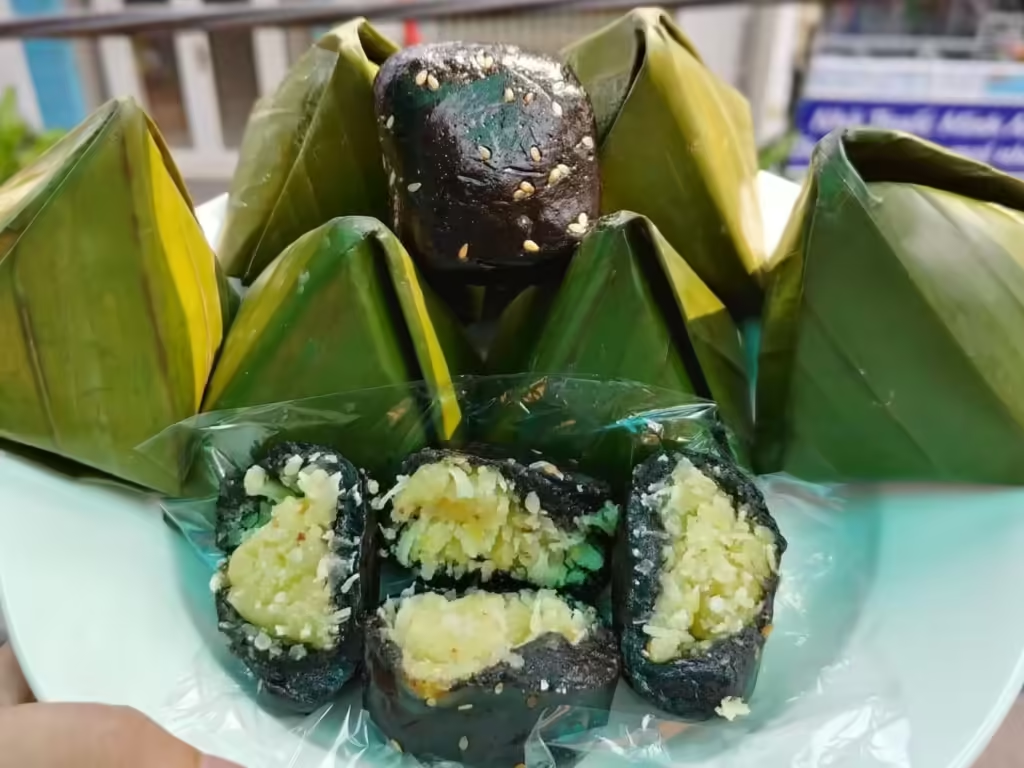
Each cake is wrapped individually in dried banana leaves and steamed for two hours until firm yet pliable, typically selling for 5,000 – 10,000 VND ($0.20 – $0.40) per piece. Banh It La Gai functions primarily as a celebratory gift or temple offering, but visitors find them daily in local markets and specialty sweet shops throughout the city. Locals consume the cakes at room temperature as an afternoon snack with tea or purchase them vacuum-sealed as edible souvenirs to take home.
Travellers should peel away the banana leaves carefully, as the sticky rice exterior adheres easily to the natural fibers. This traditional sweet highlights agricultural ingredients harvested across the Binh Dinh countryside surrounding the urban center. Markets near Long Khanh Pagoda frequently stock fresh batches delivered daily by rural producers.
Why Taste Banh Hoi Chao Long?
Banh Hoi Chao Long is rice vermicelli sheets with scallion oil, eaten with fresh herbs and a bowl of offal porridge. The banh hoi consists of ultra-fine rice vermicelli woven into intricate, layered sheets that are brushed generously with chopped chives and green onion oil. This delicate noodle base is served alongside a steaming bowl of rice porridge cooked in a rich pork broth, accompanied by a plate of sliced boiled pork belly, liver, and various offal cuts.
A complete set meal generally costs 40,000 – 60,000 VND ($1.60 – $2.30) and provides a filling, high-protein breakfast favored by working residents. Diners assemble small bites by wrapping pieces of banh hoi and pork in rice paper with herbs, dipping the roll into seasoned fish sauce, and alternating with spoonfuls of the warm porridge. The combination of textures from the soft noodles, tender meat, and silky porridge defines this regional morning classic.
Morning is the essential window for this dish, as local stalls often sell out of the fresh offal and delicate noodle sheets by mid-day. Visitors exploring ancient stone structures can easily combine breakfast with a morning visit to Thap Doi Cham Towers located just a short distance from downtown eateries. Eating early guarantees the freshest ingredients and warmest broth.
What Makes Bun Ram Unique?
Bun Ram is a noodle soup with a small crab, a seasonal speciality of the Binh Dinh coast. The broth is prepared by crushing small, locally harvested freshwater or brackish crabs into a fine paste, filtering the liquid, and simmering it until the natural crab proteins form soft, savory curds that float to the surface. Rice vermicelli noodles absorb this rich, briny broth, which carries a distinct earthiness and natural sweetness without relying on heavy spices.
A bowl of bun ram costs roughly 30,000 – 45,000 VND ($1.20 – $1.80) and includes fresh herbs, shredded green mango for tartness, and roasted peanuts for crunch. Because the small crabs are gathered from local tidal flats and rivers according to seasonal availability, this dish appears more frequently in smaller neighborhood eateries rather than tourist restaurants. Locals consume this soup throughout the day, particularly when cooler weather arrives along the coast.
Adding a squeeze of fresh lime and extra chili paste balances the rich crab flavor inherent in the broth. For travellers interested in regional weather patterns that influence local ingredients, the Quy Nhon Weather 2026: Best Time to Visit & What to Pack guide provides details on seasonal variations. Sampling bowlfuls during drier months ensures optimal dining conditions in open-air establishments.
Where to Find Nem Cho Huyen?
Nem Cho Huyen is a fermented pork roll, a Quy Nhon speciality originating from the Cay Sen and Cho Huyen areas in the surrounding province. Lean pork leg meat is finely minced, mixed with thinly sliced pork skin, seasoned with garlic, fish sauce, and raw sugar, and wrapped tightly in guava leaves before being enclosed in layers of banana leaves. Natural fermentation over two to three days gives the roll its characteristic sour tang, firm bite, and subtle garlic aroma.

A bundle of ten small rolls typically sells for 40,000 – 50,000 VND ($1.60 – $1.90) in local markets and specialized food shops. Residents eat the fermented rolls sliced into bite-sized rounds, often dipped in thick chili sauce or wrapped in rice paper with raw herbs and green banana slices. This item serves as a popular drinking accompaniment in local social gatherings or as a savoury snack during afternoon breaks.
When purchasing nem, travellers should check the production date stamped on the packaging to ensure the rolls have reached peak fermentation without spoiling. Pairing the sour pork with local rice wine highlights the traditional pairing preferences of Binh Dinh province. Historic sites such as Thap Banh It sit within the district where this cured meat tradition originated centuries ago.
Food Etiquette and Safety
Dining in local Vietnamese street food stalls requires basic awareness of hygiene practices and common courtesy norms to ensure a comfortable experience. Travellers should choose crowded stalls where high turnover guarantees that ingredients like seafood, herbs, and broth are prepared fresh daily. Drinking bottled or boiled water is standard practice, and asking for ice made from purified water blocks prevents stomach issues during extended culinary tours.
Table manners in casual eateries involve sharing condiment jars, using chopsticks for noodles while keeping spoons in the left hand for soup, and placing used tissues on designated trays or the floor rather than clean table surfaces. Tipping is not customary in street-level noodle shops or market stalls, though leaving small change is acceptable for good service. Respecting local operating hours ensures visitors secure seats during peak morning and evening dining rushes.
| Month | Avg. temperature | Rainy days | Crowds |
|---|---|---|---|
| January | 22.8°C | 17 | Moderate |
| February | 23.1°C | 13 | Moderate |
| March | 25°C | 10 | Busy |
| April | 27.2°C | 8 | Busy |
| May | 28.8°C | 17 | Moderate |
| June | 29.8°C | 13 | Moderate |
| July | 29.5°C | 16 | Busy |
| August | 29.7°C | 16 | Moderate |
| September | 27.9°C | 25 | Quiet |
| October | 26.2°C | 27 | Quiet |
| November | 25.1°C | 24 | Quiet |
| December | 23.5°C | 25 | Quiet |
Best Time to Eat
The culinary calendar in Quy Nhon aligns closely with regional weather patterns, making certain dishes more enjoyable during specific months of the year. Morning hours between 6:00 and 9:00 are ideal for hot noodle soups like bun cha ca and banh hoi chao long, while late afternoon suits crispy pancakes and grilled snacks. Drier months from February to August provide comfortable conditions for sitting at outdoor street tables without disruption from heavy downpours.
During the wetter months from September to December, indoor seating becomes essential as seasonal rains sweep across the coastal region. Seasonal specialties like crab-based soups taste best when local ingredients are harvested fresh during stable weather windows. Planning daily food itineraries around these natural cycles allows travellers to experience authentic flavours at their highest quality.